
Apparel Customization
Garment Sizing: A Practical Size Chart Guide for Apparel Brands
- Sphere Sport
- Read time: 9 min read
Garment sizing is how you measure the finished product and label it by size. In sportswear, the size name (S, M, L) doesn’t mean much unless it matches a clear size chart and a consistent measuring method.
When sizing is unclear, you get size swaps, delays, remakes, and reorders that don’t fit like the first run. This guide shows you how to read size charts, understand key sizing terms, and keep sizing consistent across custom products and repeat orders.
What Makes Sportswear Sizing Different
Two items can both be “Large” and still fit differently because sportswear is built for movement, not just appearance.
Sportswear sizing varies most because of:
- Fit type: slim, regular, and relaxed fits use different built-in ease
- Fabrics behavior: stretch and recovery change how the garment feels in motion
- Pattern and cut: armholes, shoulders, sleeve openings, rise, and length change mobility and comfort
- Sport needs: some sports need room for layering or padding; others need a snug fit for performance.
The practical rule: choose the size using the chart for that exact product, not the label (S, M, L).
Body Size Charts vs Garment Size Charts
If your last order had mixed fit results, it’s often not the factory; it’s the sizing method. Start by choosing the right chart.
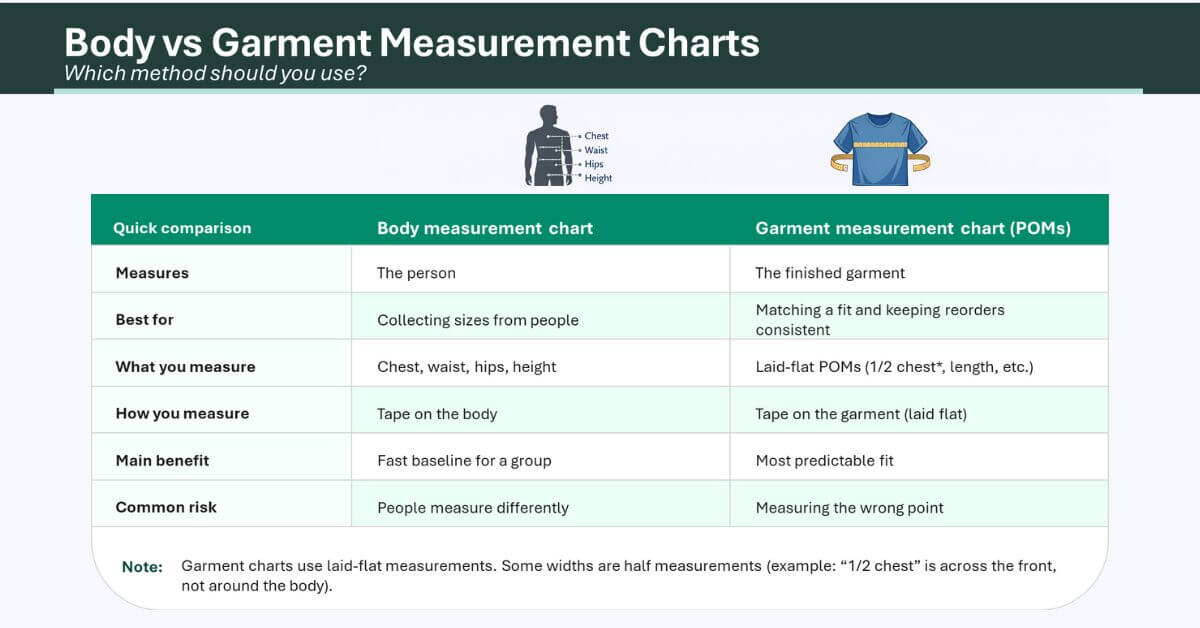
If you want consistent sizing from sample to bulk and on future reorders, use the garment chart. Body charts are only useful for helping individuals choose a size.
Key Garment Sizing Terms
Most sizing mistakes happen when key chart terms are misunderstood. These are the terms you need to read a sportswear chart correctly and keep reorders consistent.
| Term | What it means | Example | Why it matters |
|---|---|---|---|
| Units (cm vs inches) | The measurement system used | Chart is in cm | Wrong units = wrong size |
| Fit type | How the garment is designed to feel | Slim or relaxed | Changes tightness and comfort |
| POMs | Points of Measure on a garment | 1/2 chest, body length | Makes sizing repeatable |
| 1/2 measurement | Flat width, not full circumference | 1/2 chest across front | Prevents wrong comparisons |
| Grading | How sizes step up/down | Chest +2 cm per size | Explains size jumps |
| Tolerance | Allowed small production variance | ±1 cm on chest | Normal in manufacturing |
If you remember nothing else: confirm the unit, confirm whether values are 1/2 or full, and confirm the tolerance. Those three checks prevent most size chart mistakes and align with widely used apparel sizing standards for garment measurement and size designation.
Garment Sizing in Men’s, Women’s, and Youth's
Size labels don’t transfer across ranges. A “Medium” only has meaning inside its own chart and cut, so always use the size chart for the men’s, women’s, or youth style you’re ordering.
If someone asks, “What women’s size equals men’s M?”, don’t convert by label. Match measurements instead. Compare 2–3 key points that matter for the item: for tops, start with chest and body length; for shorts, use waist and hip.
Example: if a men’s M custom jersey shows 1/2 chest = 54 cm and body length = 72 cm, look at the women’s jersey chart and choose the size closest to 54 cm at 1/2 chest and 72 cm in length. If one size matches chest but another matches length, pick based on the fit target (snug vs relaxed) and how the sport moves.
CM vs Inches: How to Convert
Mixing units causes sizing errors that are easy to miss.
- Use the unit shown on the chart (cm or inches).
- Measure in that unit from the start.
- Convert only when comparing two sources
- Convert once. Don’t round early.
- 1 inch = 2.54 cm
- inches = cm ÷ 2.54
- cm = inches × 2.54
Example: A buyer measured in inches but the chart is cm (40 inches chest: 40 × 2.54 = 101.6 cm). Now compare using the chart’s method.
International Size Conversions
International size conversions won’t reliably tell you what will fit. They mainly help you show the right size label for a specific market.
To keep sizing accurate, choose your size using measurements first. Look at the size chart and match the key points that matter for the item (like chest and length for tops, or waist and hip for shorts). After you’ve picked the correct size based on measurements, only then use a conversion table if you need to show an EU/US/UK/AU label on a tag or product page.
Example: You check your jersey garment sizing chart and the size that matches your target fit is Size L with 1/2 chest = 54 cm and body length = 72 cm. You choose Size L because the measurements match what you need. If you’re selling in Europe and need an EU label, you use your conversion table to find the EU label that corresponds to that same Size L. The fit doesn’t change, only the label does.
Simple rule: You use measurements to pick the size. You use conversions to rename it for the market.
How Size Chart Development Works
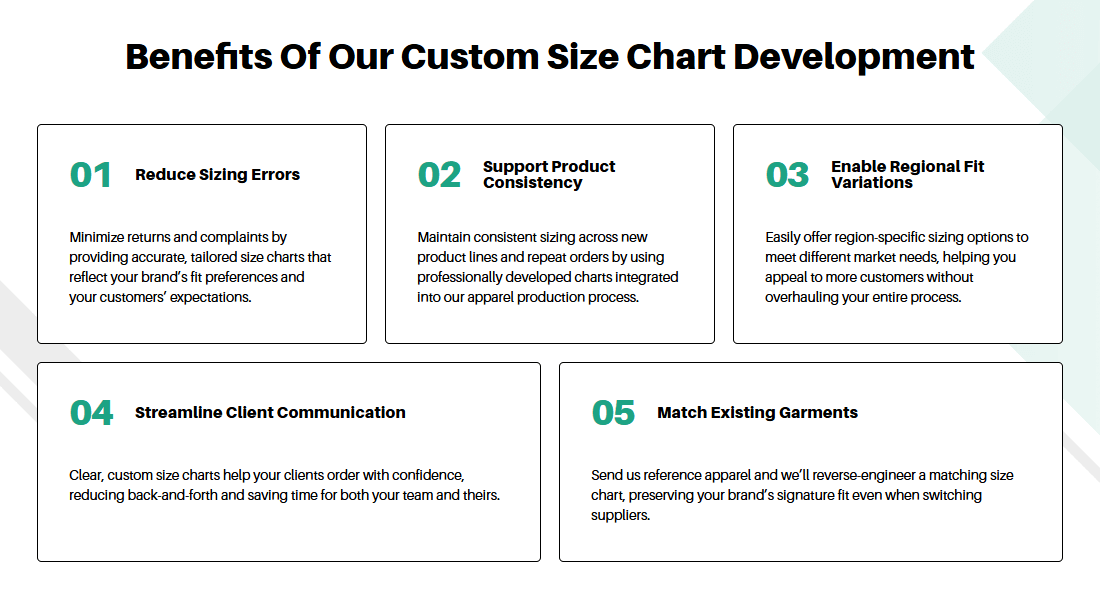
In sportswear production, the size chart is the fit blueprint for each product. It’s what keeps your sample, bulk order, and future reorders fitting the same way. If the garment sizing chart changes, the fit changes.
Sphere Sport starts with proven standard size charts for each apparel type. These give you a reliable base. If you need a specific fit, the chart can be built or adjusted during your custom order using your measurements or a reference garment.
Size charts are usually created or refined in one of these ways:
- Start from a standard chart
- Use a ready-made chart for that product type, then confirm or fine-tune the fit during sampling.
- Build from your measurements or a reference garment
- Use your own measurement data or send a “perfect fit” sample. Key points like 1/2 chest, body length, waist, and sleeve openings are matched and locked in.
- Create separate charts when needed
- Different cuts need different charts. This includes youth vs adult, men’s vs women’s, or athletic vs relaxed fits. Each version is saved separately so you can reorder the correct one later.
Once a size chart is approved for the same product (same cut and fabric), keep using it for future orders. This is the simplest way to prevent fit changes over time and keep sizing consistent.
Sport-by-Sport Garment Sizing Tips
Different sports demand different fits. This table highlights the measurements that matter most for movement, layering, and comfort so you don’t size a running top like a rugby jersey.
| Sport category | What to prioritize (measurements) | Typical fit target | Common mistake |
|---|---|---|---|
| Field sports (soccer, rugby, AFL, hockey) | Chest, shoulder width, jersey length, shorts waist | Athletic fit with room to move | Choose a tight fit that blocks layering or riding-up during play |
| Court sports (basketball, volleyball, netball) | Armhole/sleeve opening, shoulder room, torso length, shorts length | Slightly relaxed for reach and jump | Ignore arm mobility and ending up with tight armholes |
| Running & endurance | Chafe zones, sleeve opening, body length, tightness level at chest/waist | Often slimmer but not restrictive | Copy field-sport fit and getting excess fabric that rubs |
| Training & gym | Fit preference + range-of-motion points (chest, shoulder, hem), shorts waist | Regular or relaxed | Ignore fit preference and mix slim + relaxed expectations |
| Water sports (rash guards, swim shorts) | Snug chest/waist fit, stretch recovery, neck opening, sleeve opening | Close-to-skin on rash guards | Expect it to feel “loose” like a training top |
| Youth teams | Height + chest first; then body length and waist | Depends on sport and layering | Size by age only and getting wide variation across kids |
Use these priorities to choose the right measurement points for each sport. Next, we’ll cover why measurement points change by product type and why charts shouldn’t be reused across different items.
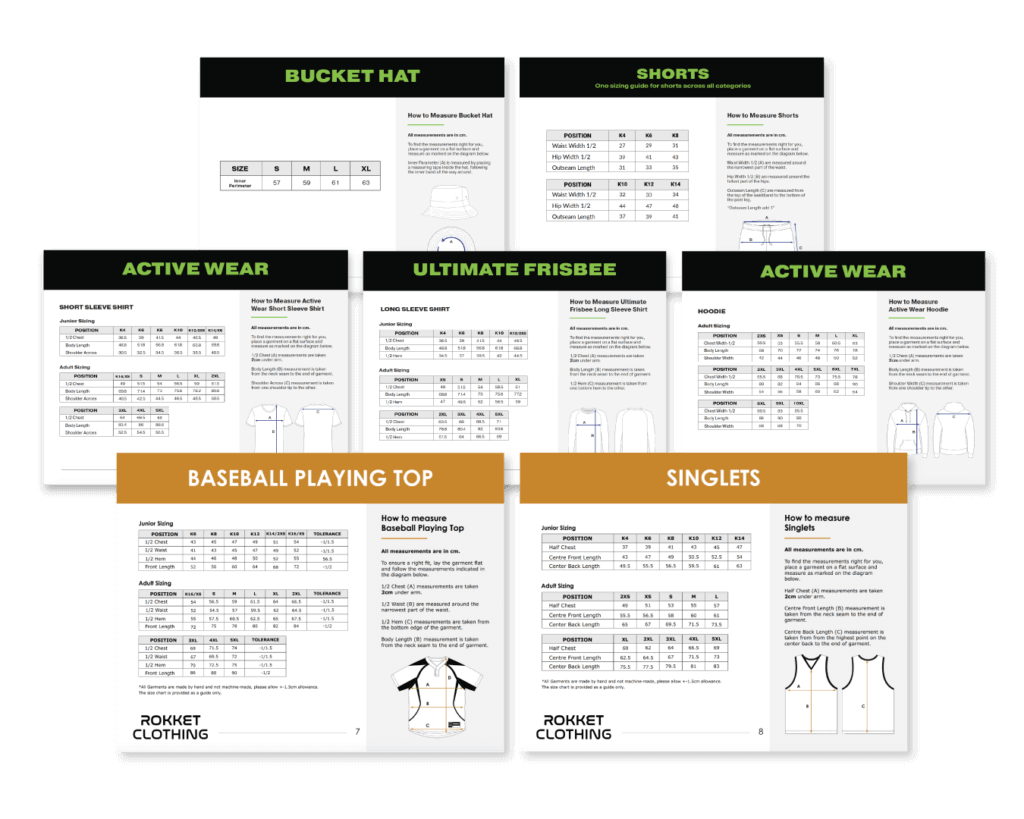
Why Measurement Points Change by Product
You can’t use one garment sizing chart for everything because each product is built and worn differently. A bucket hat sits on your head. Shorts stretch at the waistband and hips.
A jersey needs room for shoulders and movement. That’s why the “right” measurement points change by item.
Measurement points change for three main reasons:
- Construction changes the shape: Panels, seams, armholes, collars, and waistbands all affect where a garment sits and where it needs room. So the points you measure and where you measure them need to match the construction.
- Movement happens in different areas: The stress points aren’t the same across products. Jerseys need shoulder and sleeve freedom. Shorts need space through the hip and thigh. Rash guards need stretch and recovery at the chest and waist.
- Fit goals are different by item: Some products are meant to feel snug (rash guards), some are meant to feel relaxed (basketball jersey), and some need layering room (field sport warm-ups). Your measurement points need to reflect that goal.
Decide the product first, then choose the measurement points that control fit for that product. If you skip this step, you’ll measure the wrong areas and the chart won’t match how the item is actually worn.
| Product type | Key measurement points | Why it matters |
|---|---|---|
| Jerseys / playing tops | chest (often 1/2), body length, sleeve opening | comfort, airflow, range of motion |
| Singlets | chest, armhole, body length | mobility without excess fabric |
| Shorts | waist (relaxed & stretched), hip, inseam, outseam | comfort in movement and sitting |
| Training tops | chest, shoulder width, hem | balance fit and everyday wear |
| Bucket hats / headwear | head circumference, crown height | secure fit without pressure points |
| Specialty items | sport-specific points (padding zones, grip zones) | performance and safety needs |
When you measure the right points for the product, your size chart becomes repeatable, so your sample, bulk order, and reorders are much more likely to match.
FAQ
What’s the difference between garment sizing and body sizing?
Body sizing measures the person. Garment sizing measures the finished product using set points of measure.
What does “tolerance ±1 cm” mean?
It means the garment can be 1 cm above or below the target measurement and still be within spec. That’s normal in production.
Should I use cm or inches?
Use the unit on the size chart. Don’t mix units.
Can I reuse the same size chart for different products?
No. Different products have different measurement points, construction, and fit goals.
Are international conversions reliable?
Conversions are helpful for labeling, but they are not enough to choose a size. Use measurements for decisions.
Why does the same size fit differently between two suppliers?
Fit type, fabric behavior, and pattern standards vary. That’s why the chart and method matter more than the label.
Final Thoughts
Garment Sizing works best when you treat it like a production standard. The size label is just a label, the real standard is your size chart, measurement method, grading, and tolerance. When those are clear, you reduce size swaps, avoid reorder surprises, and keep fit consistent across seasons.
If you’re planning to make a custom order and want to reduce sizing risk early, contact us with your product type, fit target, and your current size chart (or a reference garment). We’ll help you confirm the key measurement points to lock in before sampling and production.